
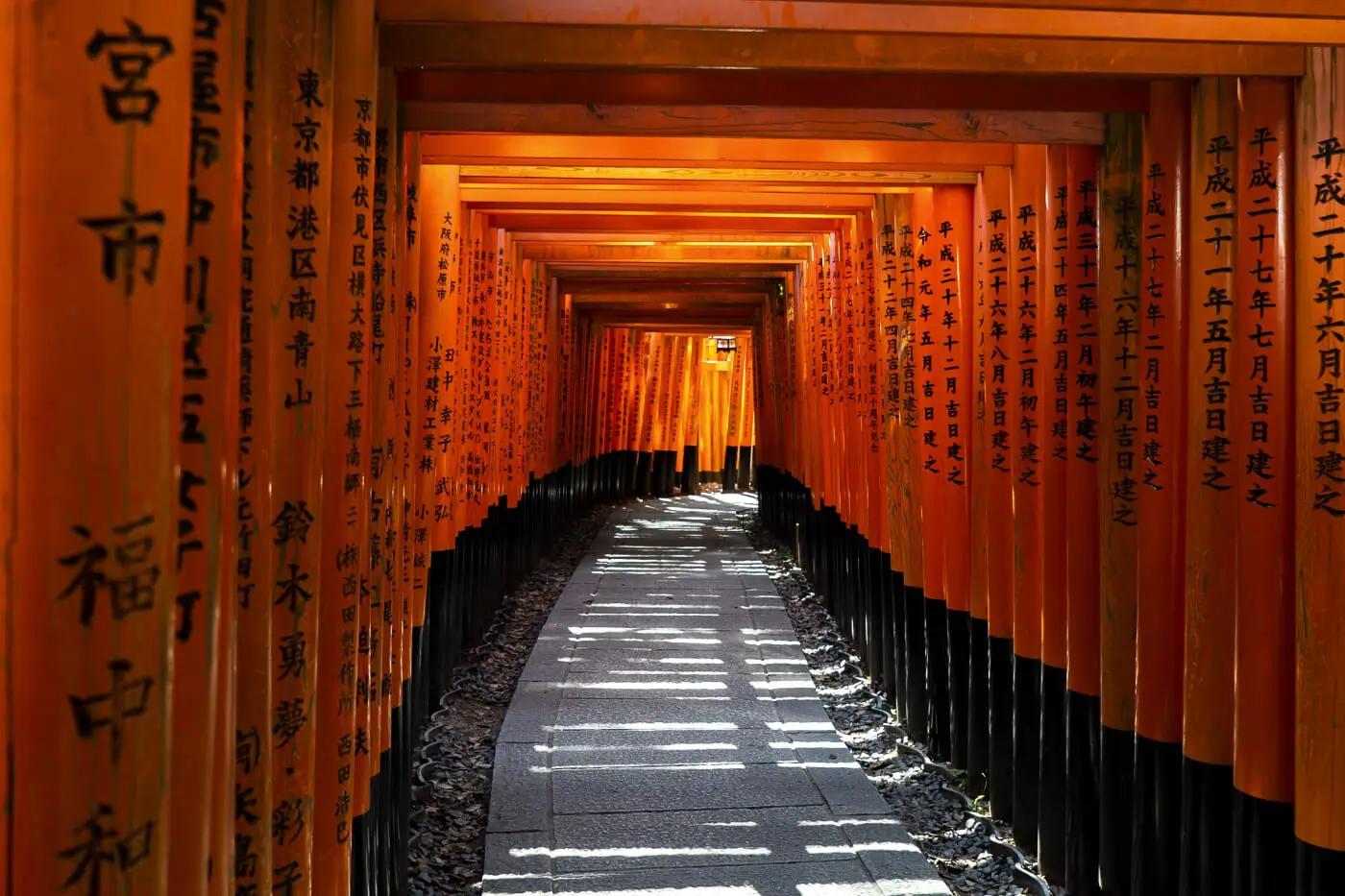
If you've seen photos of Kyoto, chances are you've already seen Fushimi Inari.
Thousands of bright red torii gates winding through a forested mountainside have become one of Japan's most recognizable sights, attracting millions of visitors every year. It's easy to understand why. Walking through the seemingly endless tunnels of vermilion gates feels unlike anywhere else in the world.
But there's much more to Fushimi Inari than its famous photographs.
While many visitors stop after the first few hundred gates, those who continue higher up the mountain discover quiet forest trails, hidden shrines, panoramic viewpoints, and a side of Kyoto that feels surprisingly peaceful. More importantly, Fushimi Inari is still an active place of worship with a history stretching back well over a thousand years.
Whether you're visiting Kyoto for the first time or returning to explore beyond the usual highlights, this guide will help you make the most of your visit while understanding the traditions that make Fushimi Inari such a special place.
What Is Fushimi Inari?
Located in southern Kyoto, Fushimi Inari Taisha is the head shrine of more than 30,000 Inari shrines found throughout Japan.
The shrine is dedicated to Inari, the Shinto deity associated with rice, agriculture, prosperity, business, and success. Over the centuries, as Japan's economy changed, Inari also became closely connected with merchants, manufacturers, and entrepreneurs, which explains why businesses from across the country continue to support the shrine today.
Founded in 711, Fushimi Inari is one of Kyoto's oldest and most important religious sites. Unlike many of the city's famous temples, it remains deeply woven into everyday life. Throughout the year you'll find local families, business owners, and worshippers visiting to pray alongside tourists exploring the mountain.
One of the best things about visiting is that admission is completely free. The shrine grounds and mountain trails are open 24 hours a day, making it one of Kyoto's most accessible attractions.
Why Are There Thousands of Torii Gates?
The thousands of red torii gates are what make Fushimi Inari instantly recognizable, but they aren't simply decorative.
In Shinto, a torii gate marks the transition between the ordinary world and a sacred space. Passing beneath one symbolizes entering an area dedicated to the gods.
At Fushimi Inari, nearly every gate has been donated by an individual, family, or business as a gesture of gratitude or a prayer for future prosperity. This tradition dates back centuries and continues today.
If you look closely at the back of each gate, you'll notice black inscriptions. These usually include the name of the donor and the date the gate was dedicated. It's a fascinating reminder that the shrine is constantly growing, with new gates added regularly while older ones are maintained or eventually replaced.
The most famous section, known as the Senbon Torii or "Thousand Torii Gates," creates the iconic tunnel that most visitors come to see. Despite its name, there are actually many thousands of gates spread throughout the mountain trails, not just a thousand.
The further you walk, the more you'll notice subtle differences in their size, age, and condition, giving the upper sections of the shrine a very different atmosphere from the busy entrance.
Meet the Foxes of Fushimi Inari
As you explore the shrine, you'll quickly notice stone fox statues standing guard throughout the grounds.
These foxes, known as kitsune in Japanese, are often misunderstood. They're not the gods themselves. Instead, they're believed to be messengers of Inari, carrying offerings and prayers between the human world and the divine.
Many of the statues hold symbolic objects in their mouths. A key might represent the storehouse of rice, a scroll might stand for wisdom, while sheaves of rice or sacred jewels point to good fortune and prosperity. Each object adds a small layer of meaning if you take the time to notice it.
Foxes also play a prominent role in Japanese folklore, where they're often portrayed as intelligent, mysterious, and occasionally mischievous. At Fushimi Inari, though, their role is one of guardianship rather than trickery.
Take a little time to look closely at the different statues around the shrine. No two are exactly alike, and noticing the objects they carry adds another layer of meaning to your visit.
Getting to Fushimi Inari
One reason Fushimi Inari is so popular is how easy it is to reach.
The shrine sits just a few minutes south of central Kyoto and is directly connected to public transport.
The closest stations are:
- JR Inari Station – immediately opposite the shrine entrance
- Keihan Fushimi-Inari Station – around a five-minute walk away
If you're staying near Kyoto Station, the journey takes less than ten minutes on the JR Nara Line.
Because it's open all day and night, Fushimi Inari is also one of the easiest places to fit into your itinerary. Many visitors stop here early in the morning before heading to attractions like Kiyomizu-dera, Gion, or central Kyoto.
Walking Through the Shrine
Many first-time visitors assume Fushimi Inari is simply the famous tunnel of red gates near the entrance.
In reality, that's only the beginning.
The shrine extends across the entire forested slopes of Mount Inari, with a network of walking paths leading past dozens of smaller shrines, resting places, and viewpoints.
The Main Shrine
Your visit begins at the impressive Romon Gate before opening into the main shrine complex.
This is an active place of worship, so you'll often see people making offerings, praying, or purchasing charms and fortunes.
Take a few moments to appreciate the buildings before joining the flow of visitors heading toward the mountain.
The Senbon Torii
Just behind the main shrine is the most photographed part of Fushimi Inari.
The dense rows of vermilion gates create a winding tunnel that feels surprisingly immersive despite the crowds.
If you're hoping for photographs without many people, arriving shortly after sunrise makes an enormous difference.
Yotsutsuji Intersection
After around 30 to 40 minutes of walking, you'll reach Yotsutsuji Intersection.
Many visitors turn around here, but it's worth taking a break before deciding whether to continue.
The viewpoint offers one of the best panoramic views over Kyoto, especially on clear mornings and around sunset. By this point, you'll also notice something else: the crowds have thinned out considerably.
Continuing Higher
Beyond Yotsutsuji, the atmosphere changes completely.
The paths become quieter, the forest thicker, and the shrine feels less like a tourist attraction and more like a peaceful mountain pilgrimage.
You'll pass smaller shrines tucked into the trees, weathered torii gates, moss-covered stone lanterns, and the occasional tea house where visitors have rested for generations.
Reaching the summit takes around two to three hours for the full return walk, depending on your pace.
You don't have to complete the entire hike to enjoy the experience, but walking even a little farther than most visitors often becomes the highlight of the day.
When Is the Best Time to Visit?
Fushimi Inari is open 24 hours a day, making timing one of the biggest factors in your experience.
Early Morning
If you can only follow one piece of advice, make it this.
Arriving shortly after sunrise lets you experience the famous torii gates before the largest tour groups arrive. The cooler temperatures, softer light, and quieter atmosphere completely transform the shrine.
Midday
Late morning through early afternoon is the busiest period, especially during spring, autumn, weekends, and holidays.
Expect crowds around the lower shrine and the Senbon Torii, although the trails become noticeably quieter as you climb higher.
Evening and Night
Fushimi Inari takes on a completely different atmosphere after sunset.
The lanterns create a peaceful glow, temperatures cool down during Kyoto's hot summers, and many photographers enjoy the dramatic lighting.
While the lower sections remain lively, the upper trails become much quieter. If you decide to hike after dark, stay on the main paths and bring a flashlight or use your phone's light when needed.
Through the Seasons
Spring brings cherry blossoms throughout Kyoto, although Fushimi Inari is better known for its fresh green forests than large blossom displays.
Summer is lush and vibrant, but the combination of humidity and uphill walking makes carrying water essential.
Autumn is one of the most beautiful times to visit, with colorful maple leaves adding contrast to the bright red torii gates.
Winter offers the quietest experience. On the rare occasions when snow falls in Kyoto, the sight of snow resting on the shrine's vermilion gates is unforgettable.
Frequently Asked Questions
Is Fushimi Inari free to visit? Yes. There's no admission fee, and the shrine grounds and trails are open 24 hours a day, every day of the year.
How long does it take to walk the whole mountain? A full round trip to the summit and back takes around two to three hours, depending on your pace and how many stops you make. You can also turn back earlier, such as at Yotsutsuji Intersection, and still have a worthwhile visit.
What's the closest train station to Fushimi Inari? JR Inari Station sits directly across from the shrine entrance, and it's about a 10-minute ride from Kyoto Station on the JR Nara Line. Keihan Fushimi-Inari Station is a five-minute walk away as an alternative.
What is the best time to visit to avoid crowds? Early morning, shortly after sunrise, is the quietest time at the lower shrine and Senbon Torii. If you're visiting midday, walking past Yotsutsuji Intersection will also put you well ahead of the crowds.
Do I need to pay to see the torii gates, or is there a separate fee for the hike? No. The torii gate tunnels, the hiking trails, and the summit are all part of the same free, publicly accessible shrine grounds.