
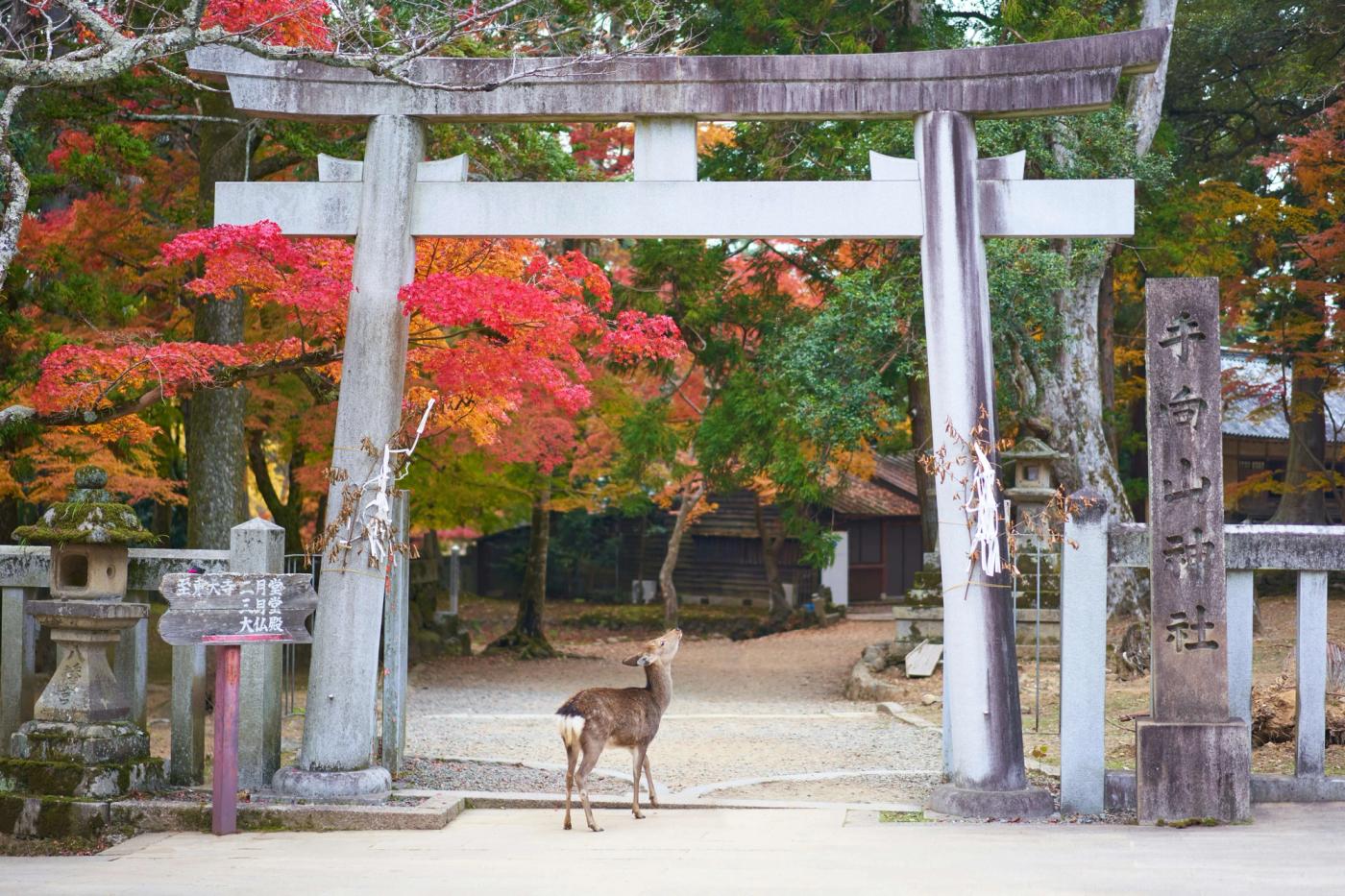
Picture this: you're standing in front of a 1,300-year-old temple, and a deer walks up and bows to you.
Not a trained circus animal. Not a costume. A genuinely wild deer, politely asking for a cracker.
That's Nara in a nutshell. It's one of the only places on Earth where centuries-old temples, sacred wildlife, and total chaos (in the best way) collide in a single afternoon. It's become one of Japan's most Instagrammed destinations, but there's a lot more going on here than cute photos suggest.
Here's everything you need to know before you go, including how not to get your map eaten.
What Exactly Is Nara Deer Park?
Here's the first surprise: there's no actual "deer park." No gates, no tickets, no fence.
Nara Park is a sprawling 500+ hectare public park in the middle of Nara City, and it happens to contain some of Japan's most important historic sites: Todai-ji Temple, Kasuga Taisha Shrine, Kofuku-ji Temple, museums, forests, and wide-open lawns. Roughly 1,300 wild sika deer simply live in and around all of it.
These deer aren't a tourist gimmick. According to local legend, the guardian deity of Kasuga Taisha arrived in Nara riding a white deer more than 1,300 years ago. Ever since, the deer have been treated as sacred messengers, and they're now officially protected as a Natural Monument of Japan.
So when you see a deer napping on temple steps like it owns the place, it kind of does.
Where Is Nara, and How Do You Get There?
Good news: Nara is refreshingly easy to reach, which is exactly why it's such a popular day trip.
Approximate travel times:
- From Kyoto: 45 to 60 minutes
- From Osaka: 40 to 50 minutes
- From Tokyo: About 3 hours via Shinkansen plus local train
Get off at Kintetsu Nara Station and you'll practically fall into the park within a few minutes' walk. JR Nara Station works too, just add another 15 to 20 minutes on foot.
Because everything clusters together, you genuinely don't need a car, a tour, or much planning. Just a train ticket and comfortable shoes.
Why Are These Deer Such a Big Deal?
Plenty of places have deer. Nara has a relationship with its deer.
Unlike animals in a wildlife park, Nara's deer have shared sidewalks, shrines, and shopping streets with residents for over a thousand years. They've shaped local identity, folklore, and even etiquette. There's a reason locals don't bat an eye when one wanders into a crosswalk.
Genetic research has also found that Nara's deer population has stayed largely isolated for centuries, making them genuinely distinct from sika deer elsewhere in Japan. So it's not just folklore. There's real, unique biology behind this herd too.
Feeding the Deer (Do This Right)
This is the moment everyone comes for: feeding the deer shika senbei, special rice crackers sold by vendors throughout the park specifically for this purpose.
A few rules that'll save you a headache:
- Only feed shika senbei, nothing else, ever (more on this below)
- Once a deer spots crackers in your hand, expect company. Possibly a crowd of company.
- Some deer bow before taking a cracker, a habit they've picked up from years of visitor interaction, not a trick they were taught
- Not every deer bows, and that's fine. Don't try to force it
- Out of crackers? Hold both hands up, empty and open. Most deer read this instantly and move along
It's genuinely one of the most charming wildlife interactions you'll have anywhere, as long as you play by the (simple) rules.
Are Nara's Deer Actually Friendly?
Mostly, yes. Technically, they're still wild animals, and it's worth remembering that for five seconds before you get too comfortable.
Deer can get a little pushy around food. You might experience:
- A nudge or shove
- A tug on your jacket or bag strap
- A grabbed map (RIP)
- A nibbled piece of paper
- A light nip
- A short, surprisingly fast chase if you're holding visible crackers
Heads up for autumn visitors: male deer get noticeably more territorial during breeding season, so give them a wider berth than usual during this time.
The golden rule: enjoy them, respect them, don't treat them like golden retrievers.
How to Be a Good Guest in Nara
Nara's deer and its visitors have coexisted peacefully for generations, and that balance depends on people doing their part. A few easy ways to help:
Respect their space. No chasing, cornering, hugging, or forcing a photo op. If a deer wants to leave, let it.
Feed responsibly. Shika senbei only. Never bread, fruit, snacks, or anything from your lunch bag.
Watch your belongings. Deer regularly mistake paper, maps, and plastic bags for food, so keep loose items zipped up and dispose of trash properly.
Be mindful at temples and shrines. Todai-ji and Kasuga Taisha are active places of worship, not just photo backdrops. Keep your voice down and don't block entrances.
Share the space. Nara draws families, school trips, photographers, and locals alike. Step off the main paths if you're setting up a long photo session so others can pass through.
Small courtesies, big difference.
Best Spots to See the Deer
Deer roam pretty much everywhere, but each corner of the park has its own personality.
Around Todai-ji. The main event. Busiest area, biggest crowds, easiest first stop for newcomers.
Kasuga Taisha. The forest path here is quieter and genuinely atmospheric, with deer wandering among ancient trees and stone lanterns.
Mount Wakakusa. A bit of a climb rewards you with sweeping views over Nara and open grassland full of grazing deer.
Tobihino. The park's chill-out zone. Great for a quiet moment or unhurried photography.
Best Time to Visit Nara Park
Honestly, there's no bad season, just different vibes.
Spring: Cherry blossoms, mild weather, peak charm (and peak crowds). Summer: Lush and green, but pack for heat and humidity. Autumn: Spectacular red and orange foliage; arguably the most photogenic season. Winter: Quiet, crisp, occasionally dusted with snow around the temples.
Pro tip: go early in the morning. Fewer people, cooler air, and softer light, basically every photographer's dream window.
There's Way More Than Deer Here
The deer get all the attention, but Nara has serious cultural weight too. Don't leave without seeing:
- Todai-ji Temple and its enormous Great Buddha
- Kasuga Taisha Shrine
- Kofuku-ji Temple
- Nara National Museum
- Isuien Garden
- The atmospheric old streets of Naramachi
Pair these with the park itself and you've easily got a full, satisfying day of exploring.
Visiting Nara in 2026: What to Expect
International tourism to Japan has fully rebounded, so Nara sees noticeably more visitors now than it used to, especially on weekends, holidays, and during cherry blossom season.
Want a quieter visit? Try this:
- Arrive before 9:00 AM
- Go on a weekday if you can
- Skip the main lawns near Todai-ji and head toward Kasuga Taisha or Tobihino instead
Just a few minutes' walk from the busiest spots, the crowds thin out fast.
Practical Info at a Glance
Admission: Free (some temples and museums charge separate entry fees)
How much time to budget:
- Quick visit: 2 hours
- Comfortable visit: Half a day
- The full experience (temples plus Naramachi): A full day
Facilities: Public restrooms, cafés, restaurants, souvenir shops, coin lockers near the stations
Accessibility: Mostly flat and accessible, though some historic temple areas involve stairs or slopes.
Photography Tips for Nara Park
- Shoot just after sunrise for the best light and fewest crowds
- Use a longer lens instead of crowding the deer for a close-up
- Frame shots with temples, torii gates, or stone lanterns for context and depth
- Time your visit for cherry blossoms or fall foliage for dramatic color
- Slow down. The best shots usually happen when you wait and watch, not when you chase
Nara Deer Park: Frequently Asked Questions
Is Nara Deer Park free to visit? Yes. The park is free. Some individual temples and museums charge their own admission.
Can you pet the deer? It's best not to. They tolerate it sometimes, but they're wild animals, not pets.
Are the deer dangerous? Not typically, but they can push, nip, or chase if they smell crackers, so stay alert when feeding them.
Why do Nara's deer bow? It's a learned behavior. Bowing has often gotten them crackers in the past, so it's stuck around as a habit rather than a trained trick.
Is Nara worth a day trip from Kyoto or Osaka? Easily one of the best day trips in the region: close, affordable, and packed with things to see beyond the deer.
Final Thoughts
Nara Park isn't just a deer-feeding photo op. It's where history, religion, and everyday life genuinely overlap.
Most people come for the deer. Almost everyone leaves remembering the temples, the quiet forest paths, and the strange, wonderful normalcy of wild animals wandering ancient grounds like they've always belonged there (because, honestly, they have).
Go early, wander past the crowds, bring your patience and your crackers, and you'll understand exactly why Nara has stayed one of Japan's most beloved destinations for over a thousand years.