
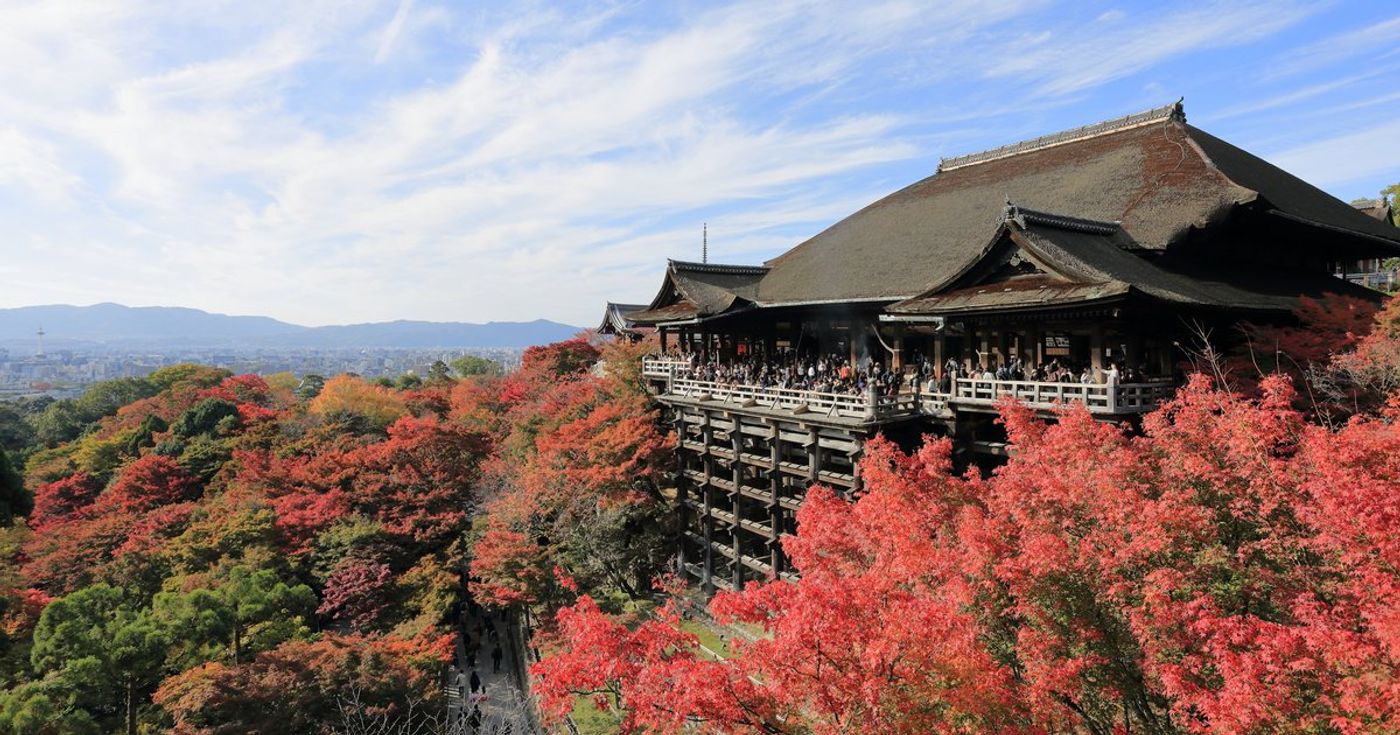
Kiyomizudera is the Kyoto temple that almost everyone has seen before they arrive: a giant wooden stage floating over maple trees, the city spreading out below, and narrow Higashiyama lanes packed with sweets, ceramics, rentals, and slow-moving visitors.
That also means it is not a secret, not even close. The trick is not to expect a quiet hidden temple. The trick is to visit Kiyomizudera like a place that is famous for good reasons, then give yourself the timing and route that make it enjoyable.
This guide covers what the temple is actually like, when to go, how to get there, what to see beyond the obvious stage photo, and the small details that help the visit feel more like Kyoto and less like a queue.
What is Kiyomizudera actually like?
Kiyomizudera, also written Kiyomizu-dera, sits on the eastern hillside of Kyoto in Higashiyama. The temple traces its origin to Otowa Waterfall, and the name is usually translated as Pure Water Temple.
The headline sight is the Main Hall and its wooden stage. The official temple site describes the hall as a wooden structure rebuilt in 1633, standing on the steep cliff of Mt. Otowa. The stage is built with traditional joinery and is famous because it feels both heavy and improbably suspended.
The paid temple area is not only the stage. The best rhythm is to enter, take in the Main Hall, look back toward it from Okunoin, walk down toward Otowa Waterfall, then leave enough time for the approach streets instead of rushing straight back to the bus stop.
Kiyomizudera is popular with tour groups, school trips, kimono rental visitors, and serious temple fans at the same time. That mix gives it energy, but it also means the mood can shift quickly from peaceful to bottlenecked.
When is the best time to go?
Go early if you want breathing room. The temple officially opens at 6:00 AM, and that early opening is the single most useful fact for visitors who dislike crowds.
The nicest regular visit window is usually the first hour or two after opening. The souvenir streets are still waking up, the tour bus flow has not fully arrived, and the stage feels more like a temple than a viewpoint line.
Late afternoon can also be beautiful, especially when the light drops over Kyoto, but it is more of a crowd tradeoff. The approach lanes are livelier, shops are open, and the air feels warmer, but the path up Kiyomizu-zaka can move slowly.
In 2026, the official opening schedule lists normal opening at 6:00 AM, with closing usually at 6:00 PM, extended to 6:30 PM in July and August. Special night viewing periods run March 27 to April 5, August 14 to 16, and November 21 to 30, with closing at 9:30 PM and last entry at 9:00 PM.
Cherry blossom season, autumn leaves, and night illuminations are the most dramatic times to visit. They are also the times when a casual mid-day arrival can feel punishing. If those colors or lights are the reason for the trip, accept the crowds and plan around them.
How do you get to Kiyomizudera?
There is no train station right at the gate. From Kyoto Station, the official access page lists Kyoto City Bus 206 or 100 to Gojozaka, followed by about a 10-minute uphill walk. From Keihan Kiyomizu-Gojo Station, the walk is about 25 minutes.
The bus is convenient on paper, but it can be packed in peak seasons. If you are already near Gion, Yasaka Shrine, or southern Higashiyama, walking through the neighborhood can be more pleasant than trying to squeeze onto a bus for a short hop.
The official temple page also gives a useful warning: some mapping apps may point visitors toward routes that do not actually lead into the temple grounds. The two temple-approved approaches are from the Nio-mon Gate at the top of Kiyomizu-zaka and from the emergency road entrance at the top of Chawan-zaka.
Parking is the least appealing option. Kiyomizudera does not have its own parking lot, and the official FAQ says nearby lots tend to jam during busy seasons. Public transportation or taxi is the better default.
Which approach street should you take?
Kiyomizu-zaka is the classic approach: steep, busy, souvenir-heavy, and very Kyoto in the theatrical sense. Expect yatsuhashi sweets, pottery, matcha snacks, rental kimono, and plenty of people stopping for photos.
Chawan-zaka, literally Teapot Slope, is often the calmer practical route. It still has shops and Kyoto texture, but it can feel less jammed than the most famous lanes when the area is busy.
If time allows, make the approach part of the visit rather than dead time. Sannenzaka and Ninenzaka nearby are among Kyoto's prettiest preserved streets, but they are narrow and popular. Early morning works better for atmosphere, while late afternoon works better if browsing shops matters.
A simple route is to go up one way and come down another. That gives you more of Higashiyama and avoids repeating the same crowded slope twice.
What should you see inside the temple grounds?
Start with the Main Hall, but do not stop there. The front view from the stage is impressive, but the more famous postcard angle is from Okunoin, where you can look back at the Main Hall with Kyoto behind it.
Otowa Waterfall is worth seeing because it explains the temple's name. The official temple page notes that visitors catch the water from three streams with ladles and pray for purification and wishes. The local etiquette point is simple: do not treat it like a challenge to collect every possible blessing.
The Nio-mon Gate and three-storied pagoda outside the paid zone are also photogenic, especially with the hillside behind them. They are easy to rush past on arrival, but they help the whole visit feel bigger than one balcony.
If special openings are running, check Jojuin Garden details separately before you go. The temple lists Jojuin as a limited-time special viewing, and those windows do not behave like ordinary daily access.
Is Kiyomizudera worth visiting if it is so crowded?
Yes, with the right expectations. Kiyomizudera is crowded because it combines a dramatic setting, real history, easy access from central Kyoto, and one of the city's most recognizable views.
It is less satisfying if you arrive at noon, follow the biggest group, take only the obvious stage photo, and leave annoyed that everyone else had the same idea. It is much better when you give it an early start, use the side viewpoints, and treat the lanes around the temple as part of the experience.
For a first Kyoto trip, Kiyomizudera earns its place. For a return trip, it is still worth considering during a night viewing, autumn leaves, or a very early morning walk through Higashiyama.
What should you know before you go?
Admission is commonly listed at 500 yen for the main paid area, but visitors should confirm the current fee on the official site or at the gate before going, especially during special openings.
The temple opens early, but shops on the approach streets usually do not. If the goal is quiet temple time, arrive around opening. If the goal is snacks and browsing, later morning or afternoon makes more sense.
Kiyomizudera is wheelchair and stroller accessible by no-step routes, and the official FAQ says vehicles may enter from the emergency road entrance at the top of Chawan-zaka for easier access near the Main Hall. Wheelchairs cannot be borrowed at the temple.
Pets are not permitted on the temple grounds except service dogs, according to the official FAQ. Bicycles are also restricted inside the grounds, with only a small designated parking area near the emergency road entrance.
Keep photography respectful. The temple is a working religious site, not only a lookout. Avoid blocking paths for long shoots, especially on the stage, near Otowa Waterfall, and along the narrow approach lanes.
Kiyomizudera FAQ
Final thoughts: the famous view is still famous for a reason
Kiyomizudera is not the place to chase solitude in Kyoto. It is the place to see one of the city's great temple views, then understand why pilgrims, school groups, photographers, and first-time travelers all end up on the same hillside.
Go early, choose the route thoughtfully, and leave time for the streets around it. Done that way, Kiyomizudera feels less like a tourist checklist item and more like the classic Kyoto scene it became famous for.